Full Basement Waterproofing in Grand Rapids, MI
Full basement waterproofing in Grand Rapids, Michigan usually means one of two systems: a drain under the floor's edge feeding a sump, or a membrane outside the wall. A short form asks one independent local contractor to get in touch, see the basement and write up the options.
Not sure if we cover your area? Check now ↓
Basement Estimate Request
Takes about 30 seconds. One local contractor gets it and contacts you.
Your details go to one independent contractor who works around Grand Rapids, MI, and that contractor gets in touch with you directly. See our Referral Marketing Disclosure.
Interior or Exterior Waterproofing?
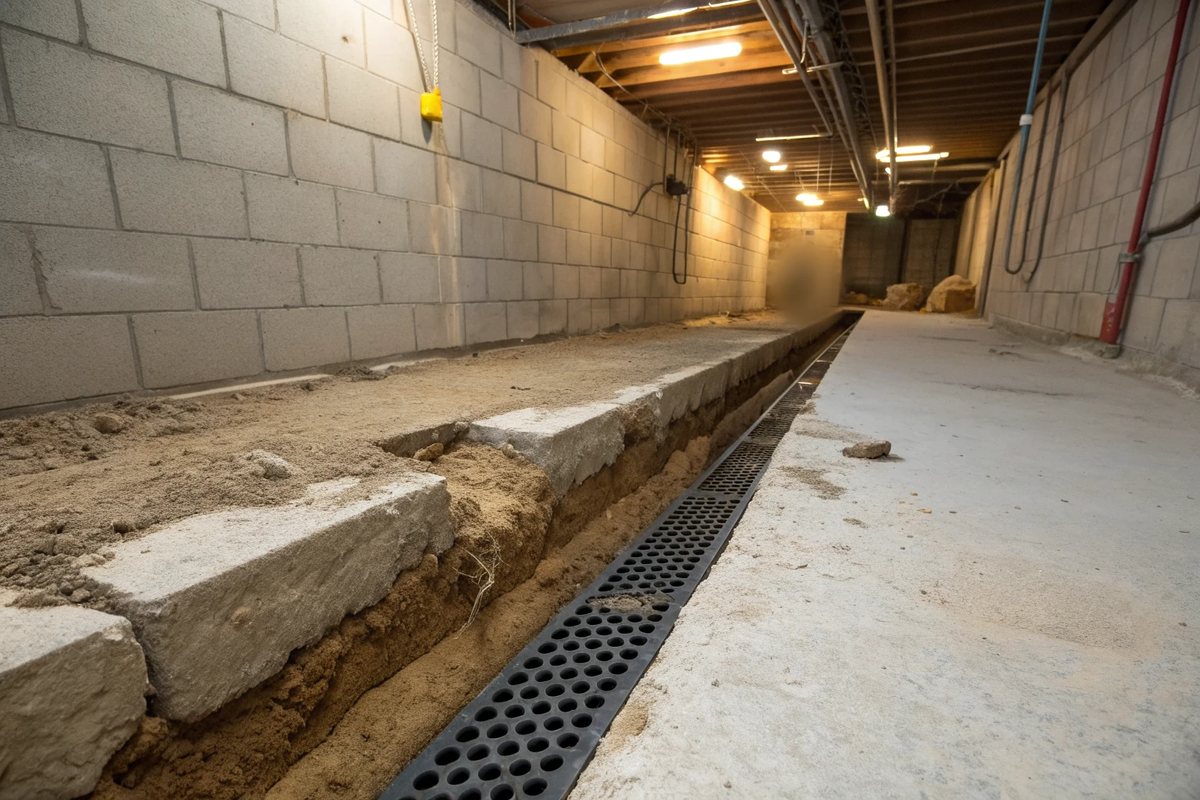
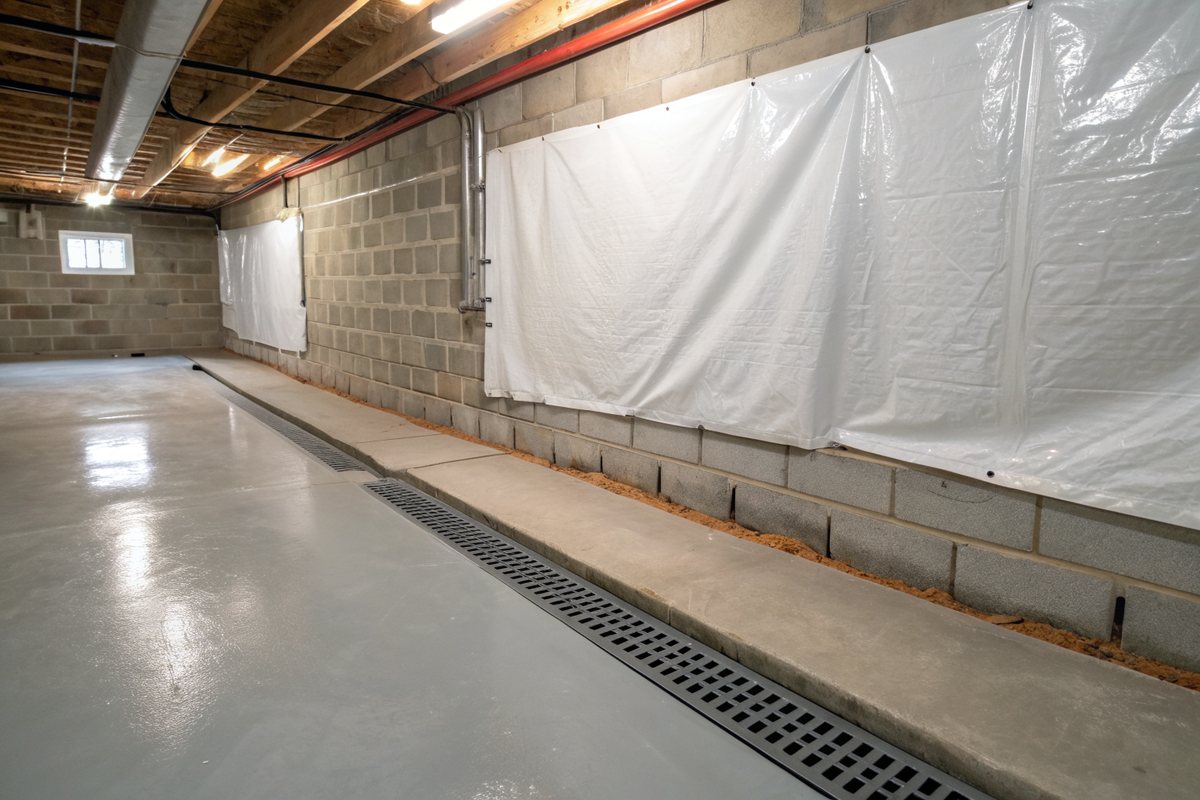
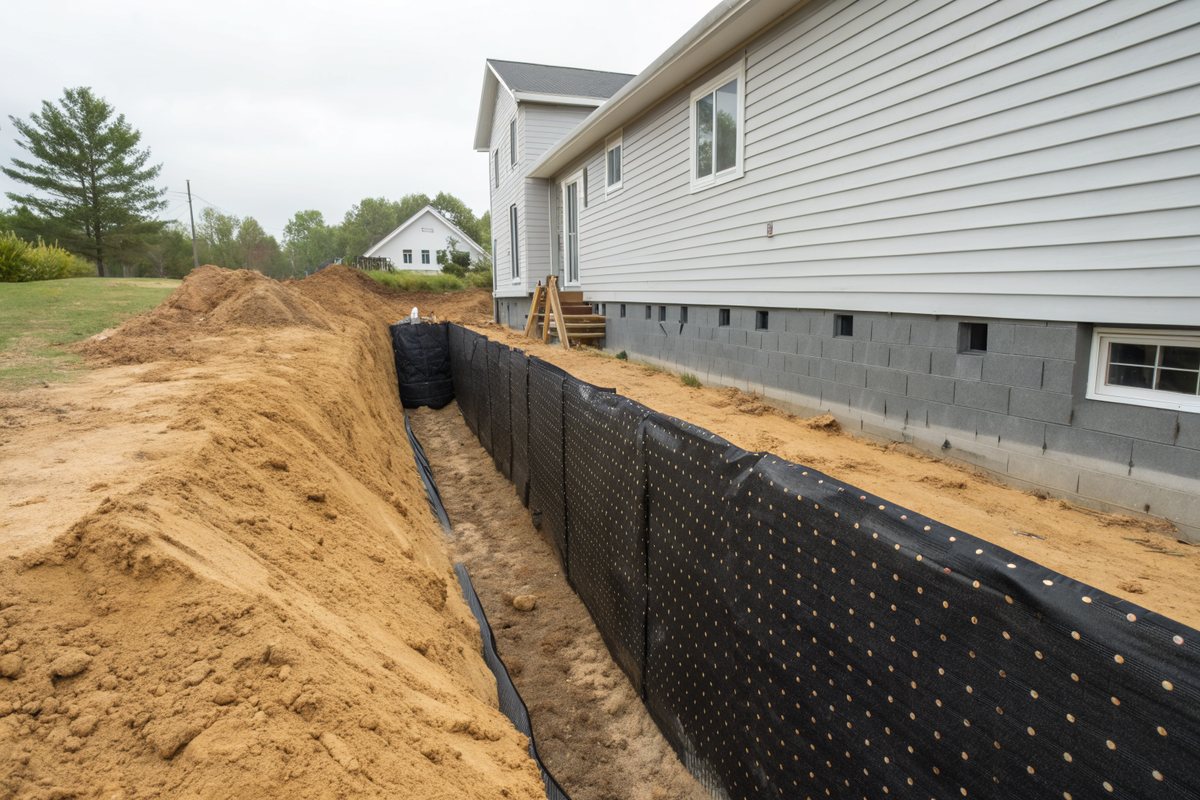
A strip of concrete comes up along the walls, perforated pipe goes down in washed stone, and the line slopes to a pit whose pump pushes water outdoors. Exterior work means digging to the footing to wrap the wall in a membrane, which disturbs porches and drives, so inside systems are the usual pick on a tight lot.
Local housing runs old. Over a third of homes in the City date from before 1940, and the median build year sits near 1953 (Census survey data). Older stone, brick and block foundations let water through soft mortar, while 1960s–1980s block and poured basements in the suburbs leak more at the floor joint, at cracks and around aging drain tile and sump systems.
Pressure drives most of it. The region rests on glacial deposits, and a 1954 USGS study found river-laid sand and gravel holds the area's richest groundwater. A high spring water table pushes moisture through every weak spot. That is why paint alone rarely holds: water behind a coating lifts it in blisters.
Jobs That Fall Under Basement Waterproofing
- Under-floor perimeter drain. Pipe in gravel along one wall or all four, pitched toward a pit.
- Pit, pump and yard outlet. A check valve, an alarm and a battery backup, with the discharge ending in the yard.
- Outside membrane. Digging to the footing on the wettest wall, then a membrane and drainage board.
- Masonry first. Repointing open joints in stone, brick or block before any coating.
Budgeting for Basement Waterproofing
| Cost row | Figure | Source (year) |
|---|---|---|
| Typical basement waterproofing project | about $3,000 to $10,000 (average about $5,000) | Fixr national (2026) |
| Interior perimeter drain, per linear foot | $40 to $120 | Fixr national (2026) |
| Sump pump installation | $600 to $2,500 | Fixr national (2026) |
| Epoxy crack injection, per crack | $250 to $1,000 | Fixr national (2026) |
| Waterproof paint or sealant, per sq ft | $1 to $8 | Fixr national (2026) |
No Michigan source publishes its own rates, so these are Fixr's national 2026 numbers; this site sets no prices. Excavation and bracing have no sourced figure, so request them as separate estimate lines. The cost calculator turns basement size into a rough range.
How the Work Usually Goes
- A written proposal. Inside, outside or both, feet of drain, the pump model and where its line exits.
- Permits. Foundation and excavation jobs in the City generally take a City building permit, with plumbing on its own permit; the contractor checks with the Development Center. Suburbs run their own offices.
- Plumbing kept apart. A pump line running out to the lawn is part of the job. Joining it to any drain or sewer pipe is plumbing for a licensed plumbing contractor, who pulls that permit.
Why Homeowners Use This Service
One form brings one independent local contractor. This free referral service does no basement work, holds no Michigan residential builder or maintenance and alteration contractor license, names no prices and signs nothing. Contractors may pay it a flat advertising fee, waived during a free trial; homeowners never pay or receive anything.
Michigan's rule for builders and contractors wants the deal in writing, signed by both sides. Before signing, look for:
- A license number you checked. Search it on LARA's online license verification; it should cover basement waterproofing or be a residential builder license.
- Cost, work and materials. Feet of drain, which walls, and the type and quality of materials, pump included, with any change signed too.
- Payments as work moves along. LARA warns against paying everything up front.
Answers Before You Call
Inside or outside: which suits an older Grand Rapids house?
It varies. An inside drain catches water once it reaches the wall and disturbs less of the property; an outside membrane stops water sooner but means digging along the foundation. Owners of older masonry basements often ask a contractor to price both.
Why is the basement wetter in April than in August?
Snowmelt and spring rain lift the water table, and saturated ground can hold water against a foundation for weeks. By late summer the soil has usually drained. That is why a drain and pump get sized for spring flow rather than for the dry months.
Where should the sump water go?
Out into the yard, aimed away from the house and neighbors, and never into the sanitary sewer. The City of Grand Rapids is removing footing drains from its sanitary system through its own programs, and any tie-in to a pipe is work for a licensed plumbing contractor.
Is a dehumidifier still worth having afterward?
Often. A drain and pump handle liquid water, but a room below ground still takes in muggy summer air. A dehumidifier that empties on its own, plus a vapor barrier over bare walls, keeps a finished basement from feeling clammy.
See Also
For one damp corner, see basement leak repair or foundation crack repair; sump pump installation and basement drainage cover the parts of a bigger system.
Next Step: A Waterproofing Estimate
Note which walls get wet, the age of the house and when water appears. One independent local contractor replies to arrange a visit and a written estimate; going ahead is your call alone. Filling it in takes about two minutes.